Picking the best speakers can transform the music you listen to at home, in your studio, DJ setup or on the live stage. But before you purchase a new sound system, it’s essential to understand the distinction between active and passive speakers. Both can provide great sound quality, but they come with different levels of amplification, connectivity, installation, and flexibility.
Active speakers contain a power amplifier built in, while passive speakers need a power amplifier or an amplifier-equipped receiver. This key distinction impacts the equipment you need to buy, how you install it and how easy it is to upgrade your system.
In this article, you will know about active vs. passive speakers, their pros and cons and we will help you to determine whether an active or a passive speaker is more appropriate for your needs.
What Are Active Speakers?
Active speakers are also called as powered speakers. They have a power amplifier integrated into the speaker itself. There is no need for a dedicated power amplifier. In a powered speaker, you can plug in a source device such as a mixer, computer, audio interface or playback device into the speaker, depending on the model.
Most powered speakers come with extra features including controls for volume, EQ, DSP, Bluetooth and various input options. However, the number of features differs from model to model.
Advantages of Active Speakers
- Internal amplification eliminates the need for extra equipment.
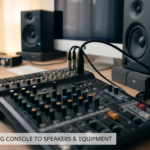
- Some models have a line-level output or can be plugged into a compatible audio source or mixing console.
- The manufacturer can optimise the amplifier and the speaker drivers for your particular application.
- Some models have EQ, DSP and input level controls.
- Active studio monitors are commonly used for home recording, music production and desktop listening. Thus, a great option for small spaces.
Drawbacks of Active Speakers
- Many models need to be plugged into the mains, but there are battery-powered versions.
- Going for a player with a built-in amplifier upgrade is, generally speaking, more complicated, as there is no standalone amplifier upgrade.
- The defect in the internal electronics might need specialised servicing.
- The purchase price includes amplification and may include other integrated features, leading to higher initial cost sometimes.
For the musician, DJ, content creator, sound engineer or listener who needs a simple audio setup – active speakers are the way to go.
What Are Passive Speakers?
Passive speakers lack a power amplifier of their own. Passive speakers rely on an external power amplifier or a TV / AV receiver for the power that produces the audio signal that drives the speakers.
In a standard passive speaker system, there is a source of playback, a mixer or pre-amplifier if needed, an external power amplifier, and speakers. The amplifier should match the speakers, in terms of impedance, power-handling and application.
A typical speaker arrangement is that of a passive speaker in which the speaker has one or more drivers, with an inbuilt passive crossover to divide the amplified signal between the drivers.
Advantages of Passive Speakers
- You are free to choose a compatible external amplifier based on your own budget and needs.
- It is generally possible to upgrade the amplifier and speakers independently.
- Widely used in venues, auditoriums, houses of worship, and professional sound installations. So, best for bigger installations
- The amplification is placed in a unit rack, which might house the amp depending on the design of the system.
- Some amplifiers and other gear that are compatible may be re-used in a speaker upgrade.
Drawbacks of Passive Speakers
- You will require a suitable external amplifier.
- Make sure to double-check amplifier power, speaker impedance and wiring, as there are more considerations required.
- The system may need other cables and room for equipment.
- Technical planning should be included in the system design and system configuration for small to large installations.
Passive speakers are ideal for those who want to retain control over the audio components or for a scalable sound system for professional use.
Active vs Passive Speakers: Which is Better?
One of the most debated topics is whether active or passive speakers sound better. It comes down to each particular speaker design and amplifier, the acoustics of the room, source material and the system setup.
Active speakers have integrated amplifiers, and some have digital processing that is built into the driver. This allows manufacturers to optimise the entire system. Passive speakers can also have great sound when matched with a compatible amplifier. They are affected by the sound design, room installation and setup conditions.
In conclusion, there is not much difference between active and passive speakers, and it is better to compare specifications, requirements and systems as a whole.
Which Speaker is Right For Your Need?
It will depend on how you want to use the system.
- Home studio and production: Active speakers for a home studio can simplify the install process and eliminate the need for power amplifiers. Make sure the speaker can handle the audio levels, has appropriate room controls and can be connected to the audio sources.
- DJs and live music: Active PA speakers are great for stage shows, events and transportable PA systems. Pay attention to the output power, coverage and frequency response, speaker connections and weight and power options.
- Hi-fi, home audio and stereo systems: Some people prefer active speakers so they can reduce the number of units, such as amplifiers and integrated amplifiers, used in the system. Others may want to upgrade just the speakers or want wireless streaming capability.
- Auditoriums or permanent installations: Passive speakers may be suitable for commercial or institutional venues where amplifier equipment is built into a cabinet or rack, or where an individual power amplifier is used for groups of speakers.
Active models may be ideal for small venues that do not require a permanent installation.
Things To Keep In Mind When Buying Speakers
Here are some things to keep in mind when choosing between active and passive speakers:
Purpose: Are you using speakers for home listening, recording, DJ use, public address, or a professional venue?
Budget: Remember to factor in the expense of amplifiers, cabling, stands and other accessories if needed.
Power and compatibility: Passive speakers require the right amplifier for their impedance and power rating.
Connectivity: Check for compatible XLR, TRS, RCA, Bluetooth, USB, optical and other connections as needed.
Room size and coverage: Pick speakers appropriate for your listening distance, audience size and room acoustics.
Portability: Consider weight, handles, mounting possibilities and electrical outlets.
Future upgrades: Do you want everything integrated into one package or be able to upgrade components independently?
By researching your specific usage requirements, you can avoid paying for features you don’t need and select an ideal solution.
Discover Active and Passive Speakers at Amrit Music
The first step to choosing your speakers is understanding your listening requirements. At Amrit Music, you can browse different categories of speakers for music production, live sound systems and professional audio applications. Whether you’re setting up a home studio, updating your setup or planning a live event, choosing the appropriate speakers can greatly enhance your audio experience.
Find studio monitor speakers for professional mix monitoring, or power speakers designed for use as part of a PA system at a live event. Compare recommended uses, speaker power, connectivity and amplification specifications to find the right fit for you. Visit Amrit Music to explore the range of available audio gear and equipment.
Conclusion
Once you understand the definitions and differences, you will be better equipped to determine what type of speaker you need and which brands and models to consider. Active speakers are great for simple, portable setups where convenience and reduced equipment are desirable. Passive speakers are ideal for custom configurations or when you want to upgrade your system piece-by-piece over time.
Remember to take your budget, room size, equipment compatibility, acoustic environment and future upgradeability into account. With informed research, you will make the perfect choice for your needs.
Amrit Music offers professional-grade active and passive speaker systems for a wide variety of listening, recording, performance and installation applications. Contact us today to discuss your requirements and receive recommendations.
Frequently Asked Questions
What is the difference between active and passive speakers?
Active speakers have an inbuilt power amplifier. Passive speakers need an external amplifier to drive them. This makes a difference when installing the speakers, connecting the speakers and upgrading your sound system.
Are active speakers better than passive speakers?
Not necessarily. There’s no reason why either active or passive speakers can’t sound superb. The difference comes down to your speaker design, the amplifier used with the speakers, the acoustics of your space and how you build the entire system.
Do passive speakers require an amplifier?
Yes. To drive passive speakers, you need a suitable external power amplifier or receiver with speaker outputs.
Can I connect active speakers to a mixer?
Yes. Many active speakers accept a line-level input from appropriate connector outputs from a mixer. Double-check the input type and the input signal level before connecting.
Which speaker is best for a home studio, active or passive?
Many home studios use active monitors because the amplifier is built into the speaker and they’re easier to connect to a soundcard or mixer. Alternatively, passive speakers are also often suitable if you already have a compatible system or prefer a more modular setup.
Do active speakers need power?
Most active speakers need a mains power supply to drive their internal amplifiers, although some can run off batteries. Passive speakers don’t need external power as their internal amplifier is supplied by an external power amplifier.
Are active speakers good for DJs?
Yes. Active audio speakers are popular with many DJs because the speakers include the amplifier, so they are ready to use. Make sure the speaker’s power, coverage and input types match your DJ set-up.
What should I consider before buying active or passive speakers?
Think about your application, budget, sound coverage requirements, connectivity options, amplifier requirements and whether you need a modular system or not. For passive speakers, also consider amplifier compatibility and speaker impedance.